$10 Billion TikTok Fee Controversy: All You Need to Know
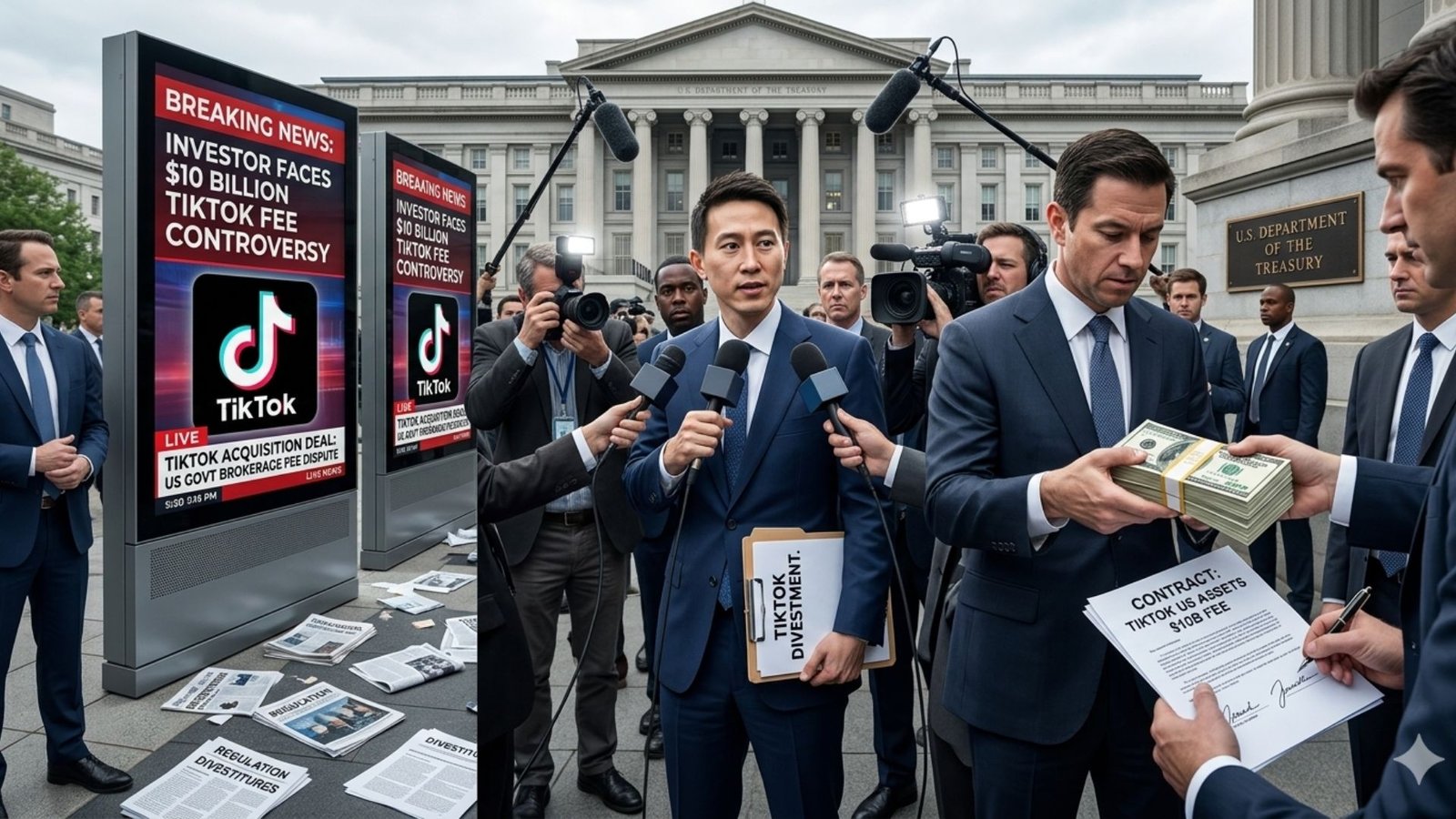
The TikTok fee controversy highlights complex intersections between technology, policy, and investment. Investors restructuring TikTok’s U.S. operations may pay up to $10 billion to the Trump administration, triggering significant debate over regulatory motivations and potential precedents.
Supporters say the payment reflects the government’s role in keeping TikTok operational in the U.S. and in addressing national security concerns. Critics argue that this arrangement blurs the lines between regulation and direct government involvement.
Why the TikTok Fee Controversy Emerged
The TikTok fee controversy began with talks to separate the platform’s U.S. operations from its Chinese parent company, ByteDance.
For years, U.S. lawmakers have worried that TikTok exposes American data to foreign influence. These concerns led Washington to push ByteDance to change its U.S. business or face a possible ban.
Eventually, both sides compromised. An American-controlled company runs TikTok in the U.S., backed by major investors, including:
- Oracle
- Silver Lake
- MGX, an Abu Dhabi investment firm
These investors fund the new company, allowing TikTok to stay in the U.S.
How the $10 Billion TikTok Fee Works
At the core of the TikTok fee controversy lies the deal’s unconventional financial structure, with significant implications for the delineation of government and private-sector roles.
Reports say investors have paid $2.5 billion to the U.S. Treasury. Further payments will bring the total to $10 billion.
Officials characterize the payment as compensation for federal mediation and approval of the transaction, raising questions about the precedent this could establish for future deals.
Several factors shaped the arrangement:
- The government forced a restructuring to address national security concerns.
- Investors gained majority control of TikTok’s U.S. operations.
- ByteDance kept a minority stake and licensed its algorithm.
This arrangement allowed TikTok to remain available to millions of American users by shifting control of its U.S. operations to American investors.
Why the TikTok Fee Controversy Is So Unusual
Although government regulation of technology transactions is common, the direct collection of payments from investors represents a notable deviation from established practice. This has raised questions about creating a new standard for government-business interactions.
Analysts note several unusual elements:
1. Size of the fee
The $10 billion payment accounts for much of TikTok’s $14 billion valuation in the U.S.
2. Government involvement in private deals
Governments typically impose fines or taxes, not transaction fees for business restructurings.
3. Strategic technology oversight
The deal gives Washington more influence over a major platform used by over 200 million Americans.
Consequently, certain policy experts interpret the agreement as a signal of growing governmental assertiveness in controlling significant digital infrastructure, with potential ripple effects for future regulatory approaches.
What the TikTok Deal Means for the Tech Industry
Beyond the TikTok fee controversy, this deal highlights new government approaches to global tech companies. It could signal how future policies may affect similar platforms.
First, it shows that national security concerns now play a big role in who owns technology. Social media, cloud, and AI companies now work in areas where geopolitics is important.
Second, the deal may shape future rules, as governments could seek similar terms from companies managing large digital networks.
Finally, the TikTok restructuring shows tech companies adapting to global regulatory pressure and meeting requirements from multiple governments simultaneously.
The Bigger Picture: Technology, Politics, and Global Power
The TikTok fee controversy exemplifies a significant shift in government approaches to digital platform oversight, reflecting the evolution of state technology policy priorities.
Previously, social media platforms grew quickly with little government involvement. Today, platforms like TikTok are central to:
- data security
- digital influence
- global economic competition
So, the TikTok deal may serve as a template for how governments interact with large tech companies, especially concerning national security and oversight.
Whether viewed as a national security policy or a financial deal, the TikTok fee controversy clearly signals a shift in the relationship between political power and the tech industry.
Also see: