The Top 10 Language Learning Apps of 2026
Introduction to Language Learning in 2026
To understand the evolution of language-learning tools, it is useful to start with an overview of how learners are engaging with technology at the start of this era.
In 2026, mobile apps give language learners unmatched convenience and flexibility for daily practice.
With mobile devices everywhere, language apps exemplify education’s digital shift, letting learners choose when and what to study for greater motivation.
Furthermore, advancements in Artificial Intelligence (AI) have revolutionized language learning. AI-driven apps now tailor learning experiences to proficiency, speed, and style, building on digital accessibility. These innovations engage users effectively by adapting lessons to their needs. Machine learning algorithms then track progress, highlight areas for improvement, and refine the learning path to ensure continuous growth.
In 2026, technology democratizes language learning by making high-quality resources widely available. This accessibility connects diverse communities and fosters a more inclusive multilingual environment.
Mobile technology and AI, combined with personalized learning, are the core forces driving language education in 2026 to be more accessible, engaging, and efficient for a global audience.
Criteria for Choosing the Best Language Learning Apps
Consider several essential criteria to ensure effectiveness and user satisfaction when you select the best language learning apps for 2026. First, look for the user interface and experience. An intuitive, aesthetically pleasing interface increases engagement and motivation. Apps with a straightforward design let users focus on learning rather than navigating complex menus.
Teaching methods also play a crucial role in an app’s effectiveness. Innovative approaches like gamification and immersive scenarios directly boost motivation and retention. Apps that apply varied strategies and cater to different learning styles attract a broader audience.
Consider the range of languages offered as another key criterion. As globalization expands, many learners want to acquire multiple languages. The most effective apps provide a diverse selection, including both popular and less commonly studied languages. This diversity allows users to explore linguistic variety and build cross-cultural understanding.
Device compatibility remains essential in digital education, as learners demand flexibility. Apps that run seamlessly on smartphones, tablets, and computers let users access material anytime, anywhere.
Community engagement features play a vital part. A strong community helps learners connect, practice in real-life contexts, and share resources. User feedback guides developers, enabling them to refine content and capabilities as the learning experience evolves.
Adaptive learning integration is increasingly important, tailoring lessons to each learner’s pace for better acquisition. Using these criteria helps you find language apps with comprehensive and engaging tools in 2026.
The Top 10 Language Learning Apps of 2026
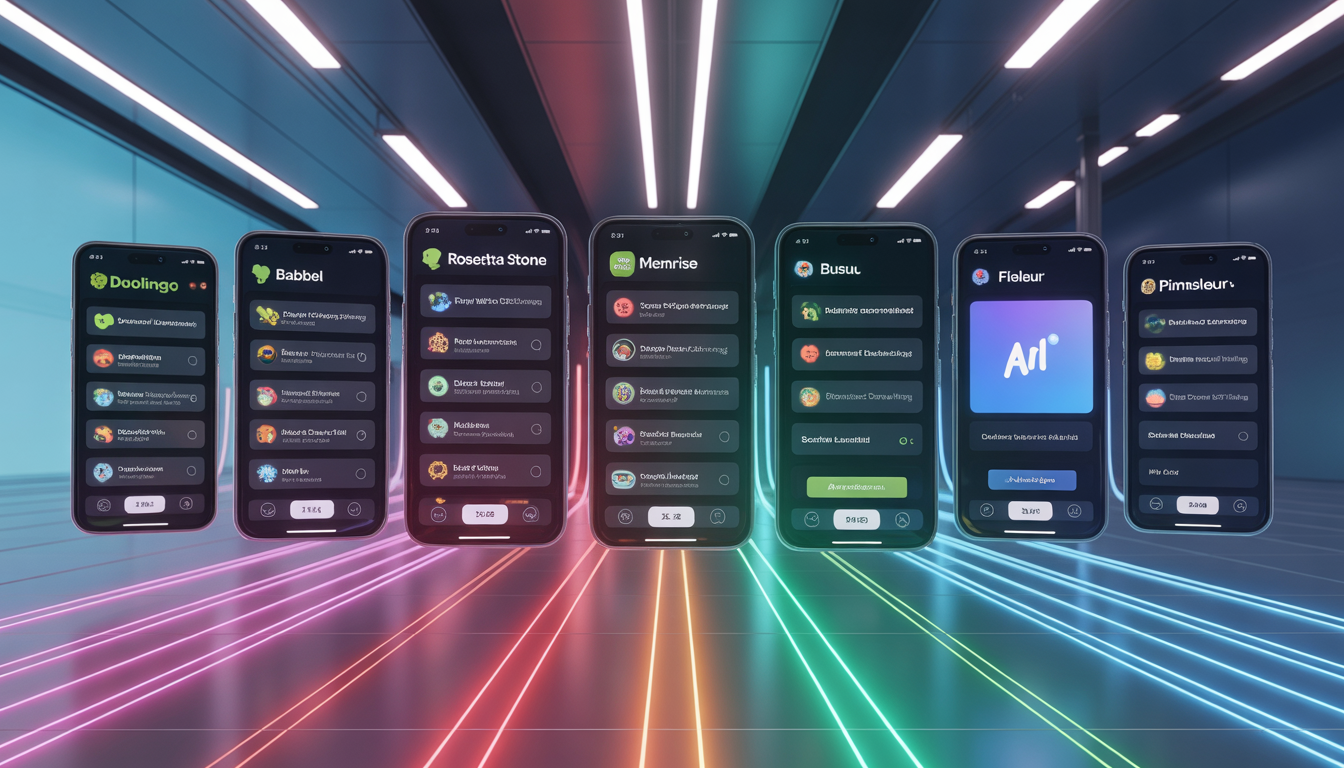
These 10 language-learning apps exemplify how modern technology is making language acquisition more accessible and effective in 2026 through innovation and user focus. Most of these apps are available on the Google Play Store and the Apple App Store.
1. Duolingo
Duolingo remains a frontrunner for its gamified learning experience, appealing to a broad demographic. Its adaptive technology tailors lessons to performance, keeping content relevant and challenging.
2. Rosetta Stone
Rosetta Stone is renowned for its immersive approach and differs from competitors by emphasizing context-based learning. Unlike apps that rely more on translations, it uses images and audio to reinforce comprehension, nurturing natural language acquisition.
3. Babbel
Babbel offers structured courses tailored to real-life conversations. Compared to other apps, its curriculum especially targets practical skills, appealing to adult learners seeking immediate application in daily life.
4. Memrise
Memrise combines mnemonic techniques with user-generated content, setting itself apart through its wide variety of courses and a strong community-driven approach. This collaborative environment helps learners excel compared to more isolating platforms.
5. Busuu
Busuu integrates a social element that lets users interact with native speakers, providing valuable feedback and promoting cultural exchange. Unlike apps focusing on solo practice, this approach enhances proficiency through real conversations.
6. Pimsleur
Pimsleur uses a scientifically backed audio-based method. In contrast to visual- or text-heavy apps, it helps learners absorb language through auditory repetition and recall exercises, which is especially effective for auditory learners.
7. Lingoda
Lingoda stands out by offering live online classes with qualified tutors. This real-time interaction mimics traditional classrooms and differs from asynchronous, self-paced apps by providing personal instruction and immediate feedback.
8. HelloTalk
HelloTalk, a social networking app for language learners, connects people from different linguistic backgrounds. Compared to structured course apps, users practice target languages through informal text, voice, and video exchanges with fluent speakers.
9. Tandem
Tandem is similar to HelloTalk but focuses more on structured learning through language partners. Compared to HelloTalk’s informal exchanges, Tandem helps organize learning sessions for increased goal orientation.
10. Preply
Preply is a personalized language learning platform. It provides one-on-one tutorship and ensures that new speakers and learners learn quickly. Its schedules are flexible to let you learn at your own pace and time.
These ten applications reflect how technology unites the global language-learning community and accommodates diverse learning styles. As user needs change, both learners and developers will drive continued innovation, reinforcing the transformative impact of digital language education.
Future Trends in Language Learning Apps
Rapid technological advancements and shifting user expectations are driving the evolution of language-learning apps. A key trend involves integrating augmented reality (AR) and virtual reality (VR) into language learning. These immersive technologies place learners in engaging environments where they practice in realistic settings, which boosts retention and practical application. Imagine using an app to converse in Italian while virtually exploring Rome and experiencing its cultural nuances firsthand.
Social interaction plays a crucial role in language learning. Future apps will create collaborative environments where users connect with native speakers or fellow learners. This social component fosters conversation practice and cultural exchange, directly reinforcing language acquisition. Features may offer real-time discussions, language exchange partnerships, and community-driven content sharing.
Culture plays a pivotal role in language use, so future apps will likely emphasize incorporating cultural context into lessons. Users will gain language instruction while learning about cultural nuances, idioms, and social norms. Relevant cultural content enriches the full language experience. Beyond 2026, language-learning apps will advance interactivity, community engagement, and cultural depth. Technology will continually redefine how learners achieve meaningful, lasting language success.